
currency exchange - ntradeX

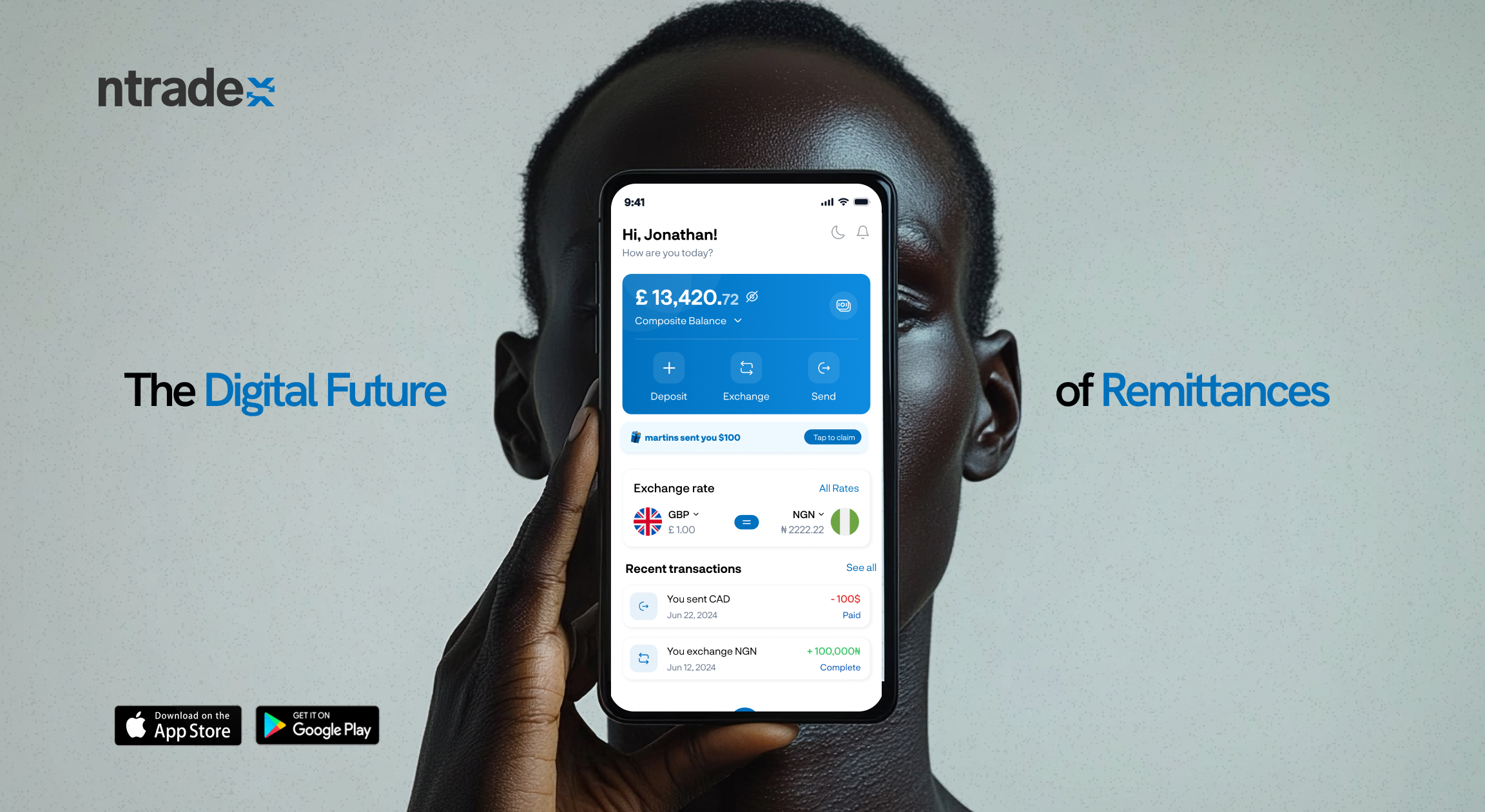
The Digital Future of Remittances: Faster, Smarter, and More Accessible

Sending money across borders has always been essential for global families, international workers, and fast-growing businesses. But in the past, remittances were slow, expensive, and often unreliable. Long queues, high fees, and waiting days for transfers to clear were the norm. Today, however, the remittance industry is undergoing a major digital transformation — and it’s reshaping how the world moves money.

The rise of digital platforms like Ntradex is breaking down old barriers and introducing a future where transfers are faster, cheaper, and more secure than ever before. Here’s a closer look at what the digital future of remittances looks like — and why it matters.


1. Speed Is Becoming the Standard

With traditional banks, international transfers often take between 2–7 business days. As digital technology improves, these long waiting times are disappearing. Instant or near-instant transfers are becoming the expectation, not the exception.

Digital remittance platforms use real-time payment rails, automated verification, and faster compliance checks to move money quickly and efficiently. This shift makes global transfers more reliable and predictable for users who depend on timely payments.


2. Lower Costs Through Innovation

High fees have always been a major challenge in global remittances. Traditional operators charge heavy markups on exchange rates and service fees. Digital platforms are changing this by automating key processes and removing the need for physical branches.

As a result, users enjoy:

  • Lower transaction fees

  • Better exchange rates

  • Transparent pricing

Platforms like Ntradex ensure that users keep more of their hard-earned money.


3. Stronger Security Powered by Technology

Security is critical in cross-border transfers — and technology is raising the bar. The future of remittances relies heavily on advanced tools such as:

  • AI-driven fraud detection

  • Biometric identity verification

  • End-to-end encryption

  • Real-time monitoring systems

These innovations protect users from scams, errors, and unauthorized access, giving them confidence with every transaction.


4. Multi-Currency Wallets Are the New Advantage

Another major trend shaping the future is the rise of multi-currency wallets. These digital wallets allow users to hold, exchange, and send different currencies with ease.

This flexibility empowers:

  • Remote workers paid in foreign currencies

  • Freelancers working with international clients

  • Families receiving money from abroad

  • Travelers who want to store multiple currencies

Ntradex’s multi-currency wallet gives users full control, helping them save money and manage their finances more effectively.


5. Mobile-First Transfers Are Taking Over

With smartphones becoming universal, remittances are shifting to mobile. Over 70% of global users now send money using apps instead of physical locations. Mobile-first platforms offer convenience, security, real-time rate alerts, and 24/7 support — all in one place.


6. Greater Financial Inclusion

Digital remittances play a huge role in expanding financial access. Billions of people who lack traditional banking can now receive money securely through digital wallets and mobile systems. This empowers underserved communities and strengthens local economies.


The Road Ahead

The future of remittances is clear: faster, smarter, safer, and fully digital. Innovations in AI, mobile technology, instant payments, and multi-currency tools are transforming the industry and creating better experiences for users worldwide.

As platforms like Ntradex continue to innovate, global money transfers will keep becoming more accessible — connecting people, supporting families, and powering businesses across borders.
What Are Remittance Rates?

Remittance rates refer to the costs and exchange rates involved when sending money from one country to another, typically by migrant workers to support their families back home. Every year, millions of people worldwide send billions of dollars in remittances, making them a vital part of the global economy—especially for developing countries. However, the amount of money that actually reaches the recipient depends heavily on the remittance rate charged by service providers.

In simple terms, remittance rates determine the cost of transferring money internationally. These rates are made up of two main components: transaction fees and exchange rate margins. Transaction fees are the upfront costs charged by banks, money transfer operators (like Western Union or MoneyGram), or digital platforms (such as Wise or Remitly) for processing the transfer. Exchange rate margins, on the other hand, are the hidden costs included in the conversion rate from one currency to another. While a provider may advertise “zero fees,” they often adjust the exchange rate slightly in their favor, which can significantly affect the amount received.

For example, if a worker in the United States sends $100 to Nigeria, and the exchange rate offered by the remittance company is ₦1,500 to $1, the recipient would get ₦150,000. But if the actual market rate is ₦1,550 to $1, the sender is effectively losing ₦5,000 due to the exchange rate margin. This is how small rate differences can have a big impact, especially for families who depend on remittances as their main source of income.


Factors That Affect Remittance Rates
Several factors influence remittance rates. These include the transfer method, destination country, regulatory environment, and competition among providers. Digital transfers are generally cheaper than cash-based or in-person transactions, as they require less infrastructure. Transfers to remote or conflict-affected countries often cost more due to limited financial systems or stricter regulations. Additionally, markets with multiple remittance service providers tend to have lower rates because competition drives down prices.


Global Trends in Remittance Costs
The World Bank regularly tracks global remittance costs through its “Remittance Prices Worldwide” database. According to its reports, the global average cost of sending $200 was around 6% in recent years, meaning that for every $200 sent, about $12 is lost to fees and exchange rate differences. The United Nations’ Sustainable Development Goals aim to reduce this figure to 3% or less by 2030, as high remittance costs disproportionately affect low-income families.


The Rise of Digital and Mobile Remittances
Technology is playing a major role in lowering remittance rates. Fintech platforms and mobile money services have revolutionized how people send funds across borders. They offer faster, more transparent, and cheaper alternatives compared to traditional banks. For instance, digital services like PayPal’s Xoom, Wise, and WorldRemit often display the real exchange rate and total cost upfront, allowing users to make informed decisions.


Conclusion
In essence, remittance rates represent the price of the connection between families separated by borders. Understanding how these rates work helps senders make smarter financial choices and ensures that more money reaches those who need it most. As technology continues to evolve and global competition grows, remittance costs are expected to keep declining—making it easier for people around the world to support their loved ones back home.

Understanding Transaction Limits

Convenience and speed have become key in today’s digital financial age. Whether you’re transferring funds online, exchanging currencies, or sending money abroad, you’ll likely come across something called a transaction limit. These limits play a crucial role in protecting users, maintaining compliance, and ensuring that financial systems operate securely. But what exactly are transaction limits, and why do they matter?


What Are Transaction Limits?

A transaction limit is a cap set by a financial institution, payment service, or platform that defines the maximum amount of money you can send, receive, or withdraw in a given transaction or period. These limits can apply to a single transaction, daily total, or monthly aggregate.

For instance, your bank might allow up to $10,000 per day in online transfers, while a money transfer app might cap international remittances at £5,000 per transaction. Limits can vary depending on several factors — including the service type, user verification level, regulatory requirements, and risk profile.


Why Do Transaction Limits Exist?

Transaction limits aren’t meant to restrict users arbitrarily — they serve important purposes:

  1. Fraud Prevention
    Limits help protect against unauthorized access or large-scale fraud. If a hacker gains access to your account, a cap prevents massive fund withdrawals in a single attempt.

  2. Regulatory Compliance
    Financial regulators around the world require institutions to monitor and control the movement of money to prevent money laundering, terrorist financing, and other illicit activities. Transaction limits are part of the Know Your Customer (KYC) and Anti-Money Laundering (AML) frameworks.

  3. Operational Efficiency
    Limits ensure that payment systems aren’t overwhelmed by unusually large transactions, which could affect processing speeds and system stability.

  4. User Protection
    They provide a buffer for users new to financial apps or cross-border transfers, reducing the impact of potential errors or misdirected funds.


Types of Transaction Limits

Transaction limits can vary widely, but most platforms define them across three main categories:

  • Per Transaction Limit: The maximum amount that can be transferred in one go.

  • Daily Limit: The total value of all transactions you can perform in 24 hours.

  • Monthly Limit: The cumulative cap for transactions within a month.

Some services also apply tiered limits — where verified users can access higher thresholds after completing identity checks or account upgrades.


How Transaction Limits Affect International Transfers

In global remittance and currency exchange platforms, transaction limits help manage risk across multiple jurisdictions. They ensure compliance with foreign exchange laws, cross-border reporting, and customer due diligence standards.

For users, understanding these limits helps in planning larger transfers strategically — such as splitting them across multiple days or upgrading verification levels to unlock higher limits.


Transaction limits are an essential part of modern financial systems — balancing convenience with compliance, and speed with safety.

Understanding how they work helps you make smarter financial decisions, avoid delays, and stay within regulatory boundaries. Whether you’re sending money across town or across continents, knowing your limits ensures your transactions stay smooth, secure, and stress-free.

How Gen Z Views Currency Differently

For decades, money was viewed through a traditional lens: cash, savings accounts, and stable national currencies symbolized financial security. But as Gen Z (those born between the late 1990s and early 2010s) enters adulthood, the definition of currency itself is shifting.

This is a generation raised on digital speed, borderless commerce, and social awareness — and their perspective on what money means reflects that. 


From Cash to Code

For Gen Z, money isn’t something you hold — it’s something you tap, scan, or transfer instantly.

They are the first truly cash-optional generation, embracing:

  • Digital wallets (Apple Pay, PayPal, Alipay)

  • Instant transfers via fintech apps

  • Cryptocurrency and tokenized assets

  • Multi-currency accounts like Ntradex for global payments

This group expects speed, transparency, and control over their funds — not long queues at currency exchange counters. For them, a digital balance feels more real than a physical note.


Borderless Thinking = Borderless Money

Gen Z grew up with global communities — gaming with peers in Tokyo, studying with classmates in London, freelancing for companies in Lagos.

They see the world as economically interconnected, and therefore expect currencies to flow freely.

While older generations still think in terms of “local vs. foreign,” Gen Z thinks in multi-currency mode:

E.g.. “How can I pay in USD, save in EUR, and earn in GBP?”

Platforms like Ntradex are perfectly aligned with this mindset — empowering users to convert, send, and hold multiple currencies without friction.


Currency as Expression of Identity

Money isn’t just a utility anymore; for Gen Z, it’s a reflection of their identity and values.

  • Many people view their spending habits as a reflection of who they are.
  • They’re drawn to brands and fintechs that emphasize sustainability, equality, and social impact.
  • They’re more likely to support ethical financial systems, from green investment funds to decentralized currencies that challenge inequality.

To them, a financial decision is also a moral and cultural statement.


Crypto, Tokens & Digital Assets: The “New Currencies”

While not all Gen Zs trade crypto, they’re the generation most comfortable with it. They grew up hearing about Bitcoin, NFTs, and blockchain — so the concept of “digital currency” feels normal, not radical.

They understand that value can exist outside of banks — in virtual assets, tokens, or even digital collectibles. 

For this generation, money isn’t just in wallets — it’s in ecosystems.


The Future: Redefining “Currency”

For Gen Z, currency doesn’t just mean money — it includes time, attention, data, and influence.

They’re building a future where financial systems adapt to people, not the other way around.

And as they take a larger share of the global economy, brands like Ntradex — offering borderless, transparent, and tech-driven currency solutions — will become essential bridges between generations.

How Geopolitical Events Impact Currency Values: What You Need to Know

Economic fundamentals, such as interest rates and trade balances, do not solely determine currency values. Often, geopolitical events play a significant and immediate role, influencing currency values in profound ways. Understanding these dynamics is crucial, whether you’re trading forex, conducting international business, or simply planning your next trip abroad.


What Are Geopolitical Events?

Geopolitical events refer to occurrences that involve global politics, international relations, or conflicts between nations. These can range from elections, policy changes, trade disputes, wars, terrorist attacks, sanctions, to diplomatic tensions. Each event has the potential to shift market sentiment and affect currency stability and strength.


How Geopolitics Affects Currency

  1. Investor Confidence and Risk Perception:

When geopolitical instability rises, investors typically flee to safe-haven currencies like the US dollar, Swiss franc, or Japanese yen. For instance, during international tensions or conflicts, these currencies often appreciate due to increased demand from risk-averse investors.

Economic Sanctions and Trade Restrictions: 

Sanctions or trade wars can significantly weaken a nation’s currency by disrupting economic growth and trade relationships. The US-China trade war, for example, directly impacted the value of both the Chinese yuan and the US dollar, causing fluctuations driven by tariff announcements and negotiations.


  1. Political Stability and Currency Strength: 

Stable governments and clear political policies generally attract foreign investment, which supports currency strength. Conversely, political turmoil or uncertainty, such as during elections or government upheavals, can deter investors, weakening the local currency.

  1. Wars and Military Conflicts: 

Military conflicts often lead to economic disruption, higher government spending, and potential damage to infrastructure and production capacity. Such scenarios typically result in depreciation of the involved nations’ currencies.


How Can Investors and Travelers Protect Themselves?

  • Stay Informed: Monitor news and events closely, especially if you have significant exposure to a specific currency or region.
  • Diversify Currency Holdings: Reduce risk by holding a diversified currency portfolio or using currency-hedging strategies.
  • Use Safe-Haven Assets: Consider safe-haven currencies or gold during times of uncertainty to mitigate potential currency risks.


Final Thoughts

Geopolitical events are unpredictable, but understanding their potential impacts on currency values allows you to anticipate market movements better and make more informed financial decisions. Whether you’re investing, trading, or simply planning an international trip, awareness of geopolitics equips you with the knowledge to protect your financial interests in volatile times.

Currency Wars: When Countries Compete for Devaluation

Currency devaluation is a strategic reduction in a nation’s currency value that can spur exports, stimulate economic growth, and enhance international competitiveness. However, when multiple countries simultaneously devalue their currencies, a phenomenon known as a “currency war” or “competitive devaluation” emerges. 

Why Countries Engage in Competitive Devaluation

Countries primarily pursue currency devaluation to:

  • Boost exports by making their products cheaper internationally.
  • Counteract trade imbalances.
  • Stimulate domestic economic activity during recessions.

Historical Examples of Currency Wars

  • The Great Depression (1930s): Several nations, including the United States and European countries, competitively devalued their currencies to increase exports and alleviate economic hardship.
  • 2010s Currency War: Triggered partly by quantitative easing policies of the U.S. Federal Reserve, prompting responses from nations like Brazil, Japan, and China.

Consequences of Currency Wars

  • Short-term benefits: Increased export competitiveness and potentially higher domestic employment.
  • Long-term risks: They include Inflationary pressures, trade retaliation, global economic instability, and strained international relations.

Managing Currency Wars

To avoid damaging consequences, international institutions such as the International Monetary Fund (IMF) recommend:

  • Increased international cooperation.
  • Transparent monetary policies.
  • Commitment to fair competitive practices rather than intentional currency manipulation.

Future of Currency Wars

With ongoing global economic tensions, currency wars continue to pose a persistent risk. Countries and policymakers must remain vigilant, ensuring that economic policies prioritize stability and cooperation over short-term competitive advantages.

Understanding the dynamics of currency wars helps nations navigate complex international trade relationships and avoid the pitfalls associated with aggressive monetary manipulation.

CURRENCY EXCHANGE vs MONEY TRANSFER, What’s the difference?🤔💵

If you’ve ever tried sending money across borders or converting one currency to another, you’ve probably seen the words “money transfer” and “currency exchange” used interchangeably. But here’s the truth: they’re not quite the same thing.

Let’s break it down.


Currency Exchange: It’s all about value

Currency exchange is the process of swapping one currency for another. Maybe you’re getting paid in dollars but need naira, or you’re travelling and want to convert pounds to euros. Either way, it’s about getting the best rate for your money.

This is where NtradeX truly shines.

With NtradeX, you’re not just exchanging currency; you’re doing it on your terms. The app gives you access to real-time exchange rates, no hidden fees, and the flexibility to choose what works best for you. It’s seamless, smart, and puts you in control.


Money Transfer: It’s about movement

Money transfer, on the other hand, is about sending money from one person (or place) to another. You’re not necessarily changing the currency; you’re just moving funds. It could be a local transfer in the same currency or an international one that includes currency conversion.

NtradeX also handles that. Whether you’re paying your cousin back or sending money for business, it’s easy to transfer directly from your NtradeX wallet.


The Power of XTAG

Now here’s where things get interesting.

NtradeX isn’t just functional, it’s rewarding. When two NtradeX users send money to each other using XTAG, they both earn points. These points aren’t just numbers; they convert into actual money.

Imagine getting rewarded just for transferring money to someone who also uses the app. That’s not just fintech, it’s smart finance.


Why It Matters

People often lose money due to poor exchange rates, hidden charges, or complicated transfer systems. With NtradeX, you get a platform that combines the power of currency exchange with the convenience of money transfer, plus a bonus system (XTAG) that gives you cash back for simply using the app smartly.

So the next time someone says, “I need to do a quick transfer” or “I’m looking for a better exchange rate,” introduce them to NtradeX. It’s built for real people making real moves with their money.

How Exchange Rates Affect International Trade and Your Cost of Living

You’ve probably noticed how prices keep going up—whether it’s groceries, rent, or that phone you’ve been eyeing. A big part of that is something called exchange rates. They might sound like boring finance talk, but trust me, they have a huge impact on your everyday life.


So, What Are Exchange Rates?
Basically, exchange rates tell you how much one currency is worth compared to another. For example, if $1 equals ₦1,500, that’s the exchange rate. And just like fuel prices, these rates go up and down based on a bunch of factors—like government policies, inflation, and even global events.


How Does That Affect Trade?
When the naira (or any currency) gets weaker, it costs more to buy things from abroad. That includes electronics, clothes, food, fuel—everything. On the other hand, if we sell stuff to other countries, it becomes cheaper for them to buy from us. That’s why countries care so much about keeping their currency stable.


Now Here’s Where It Hits You Directly
Exchange rates play a big role in how much you spend every day. Here’s how:


Imported Goods Cost More: That rice, phone, or medicine from abroad? It’ll be more expensive if the naira drops.


Inflation Rises: When businesses pay more for goods, they raise prices. That’s why your rent, transportation, or even haircuts cost more.


School Fees, Data Plans, and More: Services that rely on international systems or pricing usually increase when exchange rates change.


Some Real-Life Examples

A laptop that was ₦250k might suddenly go for ₦400k.
Cooking gas, fuel, and even bread prices shoot up.
School fees in dollars? You already know the stress.


What can you do about it?

Earn in Foreign Currency: Freelance, remote work, side hustle—anything that helps you earn in USD, GBP, or EUR gives you an edge.
Track Exchange Rates: Don’t be caught off guard. Use platforms like Ntrade to stay updated.
Support Local: Whenever possible, buy Nigerian-made products—they’re often cheaper and help the economy.


Bottom Line

You don’t have to be an economist to understand how exchange rates work. They affect your pocket every day, so knowing what’s happening helps you plan better, spend smarter, and stay ahead.

Currency Exchange Myths Busted: 6 Things You Need to Know

Currency Exchange Myths Busted: 6 Things You Need to Know

  Whether you’re sending money abroad or planning a trip, misinformation about currency exchange can cost you time and money. Let’s bust some common myths:


1. Myth: All currency exchange rates are the same everywhere.

Fact: Rates vary between banks, online platforms, and physical bureaus. Always compare before exchanging.


2. Myth: Zero commission means a better deal.

Fact: Many “no commission” services hide their profit in poor exchange rates. Check the actual rate, not just fees.


3. Myth: You’ll get the same rate you see online or on Google.

Fact: That’s the mid-market rate. Most providers add a margin. Always check what you will actually receive.


4. Myth: Exchanging at the airport is convenient and fair.

Fact: Airport kiosks often offer the worst rates due to high overheads and captive customers.


5. Myth: You need a bank to exchange money internationally.

Fact: Fintech platforms often offer better rates, faster service, and lower fees than traditional banks.


6. Myth: Currency exchange is only for travelers.

Fact: It’s essential for freelancers, remote workers, online shoppers, and anyone sending or receiving money internationally.


Always choose a transparent, reliable service with real-time rates and no hidden fees.

Want a better way to exchange currency? NTRADEX makes it fast, fair, and simple.


What Actually Affects Currency Exchange Rates?

What Actually Affects Currency Exchange Rates?

When you check the exchange rate between currencies—like the US Dollar to the Nigerian Naira or the British Pound to the Euro—it might seem like those numbers shift randomly. But the truth is, there are real economic and political forces at work behind every fluctuation.

Today, we’ll break down the key factors that actually affect currency exchange rates, so you understand what’s going on behind the scenes.


1. Interest Rates

One of the biggest drivers of exchange rates is the interest rate set by a country’s central bank.

Higher interest rates offer better returns on investments denominated in that currency. This attracts foreign investors, increasing demand for the currency and pushing its value up.

For Example:

If Nigeria’s Central Bank raises interest rates, more foreign investors may want to invest in Naira-denominated assets—raising demand for the Naira and strengthening its value.


2. Inflation Rates

Inflation measures how quickly prices are rising in a country. A low and stable inflation rate is generally good news for a currency and countries with lower inflation typically see their currency appreciate over time, as purchasing power remains strong.

For Example:

If the UK maintains a 2% inflation rate while another country’s inflation hits 10%, the British Pound is likely to remain stronger.


3. Economic Stability and Growth

Currencies tend to be stronger in countries with strong economies. Stable and growing economies attract foreign capital, which increases demand for the local currency whilePolitical instability or poor economic performance can scare investors away.

For Example:

If Canada releases positive GDP data and shows strong job growth, it could boost investor confidence and strengthen the Canadian Dollar.


4. Balance of Trade

This refers to the difference between a country’s exports and imports. A country that exports more than it imports (a trade surplus) will have higher demand for its currency because foreign buyers need to convert their currency to purchase goods.

For Example:

If the U.S. exports more goods and services, global buyers need USD to complete purchases, increasing its value.


5. Political Events and Instability

Elections, policy changes, and unrest can all cause major fluctuations in currency value because Uncertainty makes investors nervous. When they anticipate risk, they often pull their money out of unstable regions and put it in more stable economies—affecting exchange rates.

For Example:

If there’s a major political crisis in a country, its currency may rapidly devalue due to loss of investor confidence.


6. Government Debt and Foreign Reserves

When a country has High levels of national debt, it can deter investors, especially if it looks like the country might struggle to repay. On the flip side, countries with strong foreign currency reserves can better manage currency fluctuations.


Honestly, Currency Exchange is a complex subject and No single factor drives currency exchange rates—they’re influenced by a mix of economic indicators, government policies, global events, and even trader psychology. These rates are in constant motion, reacting to the smallest shifts in data or sentiment.

If you send money abroad or deal in multiple currencies, understanding what affects exchange rates could save you money—and help you pick the right time to exchange and we believe that it is only smart to trust a company with in-depth understanding of these factors and on the plus side, we offer the best rates alongside fast and reliable transfers.