currency exchange - ntradeX

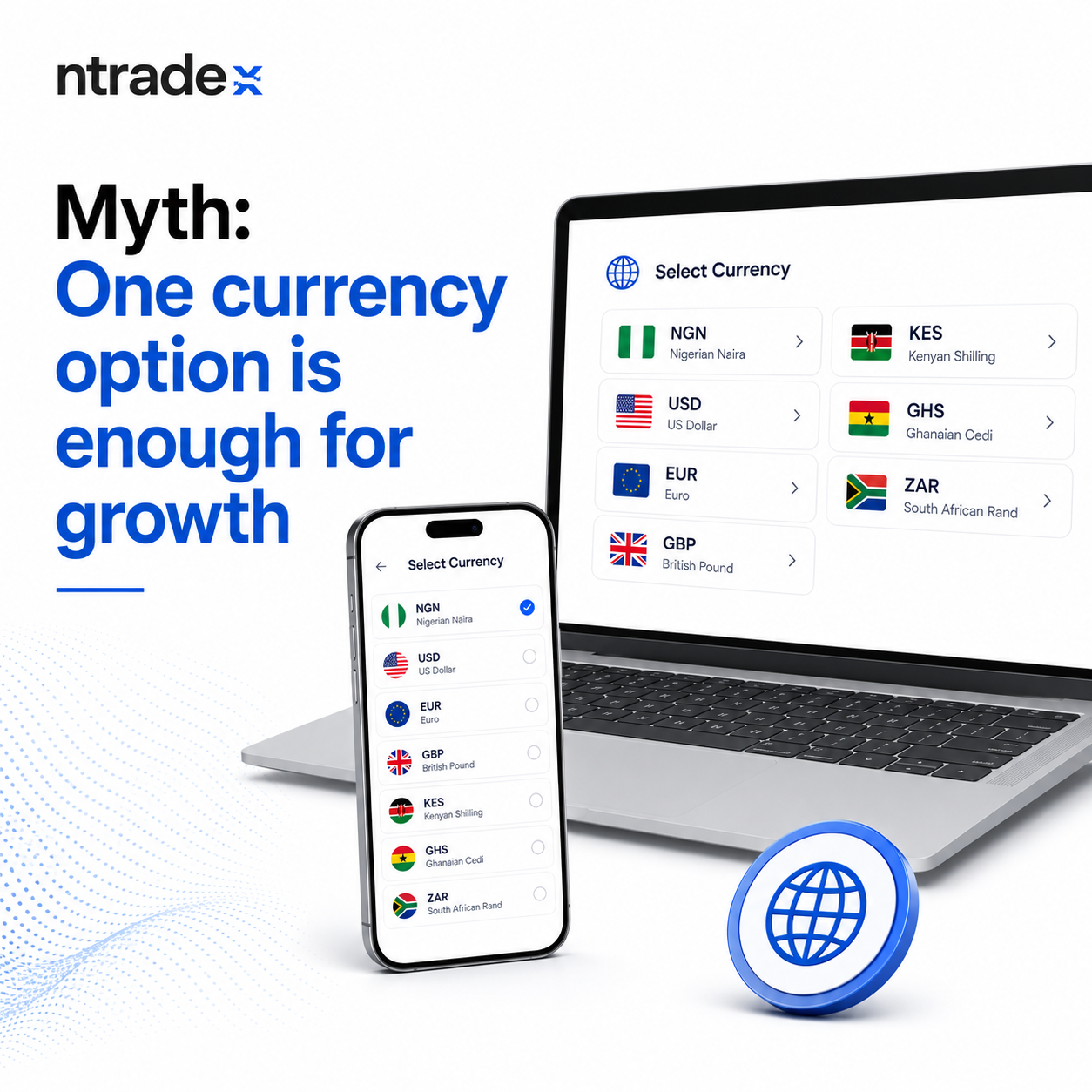
Myth: One currency option is enough for growth

For many businesses, starting with one currency option may feel simple.

It looks easier to manage. It reduces decisions. It may even work well when a business is serving only one market.

But as soon as that business begins to grow across borders, one currency option can quickly become a limitation.

Growth needs flexibility.

A business may need to pay partners in one currency, receive funds in another, serve customers in different markets, or manage settlements across multiple countries. When currency access is limited, every transaction becomes harder to plan.

This can affect payment timelines, customer experience, supplier relationships, and business confidence.

For SMEs, fintechs, PSPs, and growing companies, multi-currency access is no longer just a nice feature. It is part of how businesses scale.

The right currency exchange support gives businesses more control. It helps them access the currencies they need, reduce friction, plan better, and operate across more markets with confidence.

At Ntradex, we believe businesses need more than basic currency conversion.

They need currency options that support real growth.

Because when businesses have access to the right currencies, they are better positioned to trade, expand, and serve customers beyond borders.


Interoperability Is Becoming Essential

The future of payments will not be built in silos.

As businesses expand across borders, they need payment systems that can connect, communicate, and move value across different markets with less friction. This is why interoperability is becoming essential.

Interoperability simply means that different systems can work together. In payments, that means businesses, fintechs, PSPs, banks, and payment partners can connect across platforms, currencies, and markets more smoothly.

For African businesses, this matters deeply. A company may need to collect payments in one country, settle in another, exchange currency, and serve customers across multiple regions. If payment systems are disconnected, growth becomes harder. Transactions become slower. Visibility becomes weaker. Customers and partners lose confidence.

Connected payment infrastructure helps reduce that friction.

When systems work together, businesses can move faster, track payments more effectively, access more markets, and serve customers with greater confidence. Fintechs can scale more easily. PSPs can support more merchants. SMEs can trade across borders with fewer barriers.

At Ntradex, we believe interoperability is no longer just a technical conversation. It is a business growth conversation.

Because when payment systems connect better, businesses move better.

And the future of payments will belong to systems, partners, and platforms that can work together.

Fintech Focus: Fintechs Need Reliable Currency Exchange Support to Scale

Fintech companies are building the future of financial access, but growth does not depend on technology alone.

Behind every successful fintech product, there must be reliable infrastructure that helps money move smoothly, safely, and across markets. One key part of that infrastructure is currency exchange.

As fintechs expand into new countries, serve more customers, and process higher transaction volumes, basic currency conversion is no longer enough. They need currency exchange support that is fast, transparent, and dependable.

A fintech may have a great app, strong customer demand, and a growing user base. But if currency access is limited, rates are unclear, or settlements are delayed, the customer experience can suffer. Payments slow down. Trust becomes harder to maintain. Expansion becomes more difficult.

This is why reliable currency exchange support matters.

Fintechs need access to multiple currencies. They need predictable settlement timelines. They need clear rates, strong liquidity, and payment partners who understand the markets they serve.

With the right currency exchange infrastructure, fintechs can reduce friction, improve transaction confidence, and serve customers across borders with more consistency.

At Ntradex, we understand that fintech growth needs more than ambition. It needs reliable support behind every transaction.

Because when currency exchange works better, fintechs can scale faster, serve more markets, and build stronger customer trust.

What Do African Businesses Need Most From Currency Exchange Providers Today?

African businesses are moving faster than ever.

SMEs are importing goods, fintechs are serving customers across markets, PSPs are processing more transactions, and companies are building beyond local borders. But as business becomes more global, one challenge keeps showing up: currency exchange.

Today, businesses need more than a provider that simply converts money from one currency to another.

They need clarity.

A business should know the rate it is getting, the fees involved, when the payment will settle, and what to expect at every stage. Without clarity, planning becomes difficult. Margins become harder to protect. Trust becomes harder to maintain.

They also need reliable access to the right currencies.

For businesses trading across borders, currency availability can affect operations, pricing, supplier relationships, and customer experience. When the needed currency is not available on time, growth slows down.

They need speed, but not speed alone.

Fast payments matter, but speed must come with transparency, compliance, liquidity, and settlement confidence. A payment that moves quickly but creates confusion is not enough.

Most importantly, African businesses need currency exchange providers who understand how business actually works across African markets.

They need partners who understand local realities, cross-border pressure, payment timelines, and the importance of trust.

At Ntradex, we believe currency exchange should help businesses operate with more confidence.

Because African businesses do not just need better rates.

They need access, reliability, transparency, and payment confidence.

Consistent Service Delivery Creates Confident Businesses

In business, confidence is built when people know what to expect.

For companies that depend on cross-border payments, currency exchange, supplier payments, and settlements, consistency is not just a nice-to-have. It is a business need.

A business may have customers, suppliers, and growth opportunities, but if its payment process is unreliable, everything becomes harder to manage. Delayed settlements can affect cash flow. Unclear timelines can create pressure. Inconsistent service can weaken trust between businesses and their partners.

This is why consistent service delivery matters.

When payments move as expected, businesses can plan better. They can pay suppliers on time, serve customers with more confidence, and make decisions without constantly worrying about delays or uncertainty.

For SMEs, fintechs, PSPs, and payment partners, consistency creates stability. It helps them operate with clarity and build stronger relationships across borders.

At Ntradex, we understand that businesses need more than a platform that works once. They need payment and currency exchange infrastructure they can rely on every time.

Because reliability builds trust.

And trust is what gives businesses the confidence to grow.

Liquidity Is the Backbone of Business Payments

Most people think that sending money comes in the form of payments, especially when it is business-related. They are about making sure the right amount is available, in the right currency, at the right time.

That is where liquidity becomes important.

Liquidity is what enables businesses to pay suppliers, settle invoices, process customer transactions, and move money across borders without unnecessary delays. When liquidity is strong, payments feel smooth. When liquidity is weak, everything slows down.

For businesses dealing with international partners, liquidity can make or break a transaction. A company may have customers, demand, and supplier agreements, but if it cannot access the needed currency on time, operations can suffer.

  • Supplier payments may be delayed.
  • Settlement timelines may become uncertain.
  • Customers may lose confidence.
  • Growth opportunities may be missed

This is why businesses need payment partners that understand liquidity beyond basic transactions.

In B2B payments, speed matters. But speed depends on the availability of currency, reliable settlement channels, and a strong payment infrastructure.

At Ntradex, we understand that businesses need more than a way to move money. They need access, reliability, transparency, and confidence every time they make cross-border payments.

Because liquidity is not just a financial term.

It is the backbone that keeps business payments moving.

Why SMEs Need Planned Currency Exchange

For many SMEs, currency exchange only becomes important when it is time to pay a supplier, settle an invoice, or complete an international transaction.

But by then, it may already be too late.

Businesses that wait until the last minute often face changing rates, delayed settlements, limited currency availability, and unnecessary pressure from suppliers. In cross-border trade, these small issues can quickly become big business problems.

Planned currency exchange helps SMEs stay ahead.

When a business understands its currency needs early, it can better plan supplier payments, protect cash flow, reduce uncertainty, and avoid last-minute decisions that affect profit margins.

For example, an SME importing goods from another country needs more than a good exchange rate. It needs to know when the payment will settle, what charges may apply, whether the required currency is available, and how quickly the supplier will receive the funds.

That level of planning builds confidence.

It also protects supplier relationships. When suppliers receive payments on time, trust grows. And when trust grows, businesses can negotiate better, restock faster, and operate with fewer disruptions.

At Ntradex, we believe currency exchange should not slow businesses down. It should help them move with clarity, speed, and confidence.

That is why SMEs need planned currency exchange.

Because smart businesses do not just move money.

They plan how money moves.