Sending money across borders has always been essential for global families, international workers, and fast-growing businesses. But in the past, remittances were slow, expensive, and often unreliable. Long queues, high fees, and waiting days for transfers to clear were the norm. Today, however, the remittance industry is undergoing a major digital transformation — and it’s reshaping how the world moves money.
The rise of digital platforms like Ntradex is breaking down old barriers and introducing a future where transfers are faster, cheaper, and more secure than ever before. Here’s a closer look at what the digital future of remittances looks like — and why it matters.
1. Speed Is Becoming the Standard
With traditional banks, international transfers often take between 2–7 business days. As digital technology improves, these long waiting times are disappearing. Instant or near-instant transfers are becoming the expectation, not the exception.
Digital remittance platforms use real-time payment rails, automated verification, and faster compliance checks to move money quickly and efficiently. This shift makes global transfers more reliable and predictable for users who depend on timely payments.
2. Lower Costs Through Innovation
High fees have always been a major challenge in global remittances. Traditional operators charge heavy markups on exchange rates and service fees. Digital platforms are changing this by automating key processes and removing the need for physical branches.
As a result, users enjoy:
- Lower transaction fees
- Better exchange rates
- Transparent pricing
Platforms like Ntradex ensure that users keep more of their hard-earned money.
3. Stronger Security Powered by Technology
Security is critical in cross-border transfers — and technology is raising the bar. The future of remittances relies heavily on advanced tools such as:
- AI-driven fraud detection
- Biometric identity verification
- End-to-end encryption
- Real-time monitoring systems
These innovations protect users from scams, errors, and unauthorized access, giving them confidence with every transaction.
4. Multi-Currency Wallets Are the New Advantage
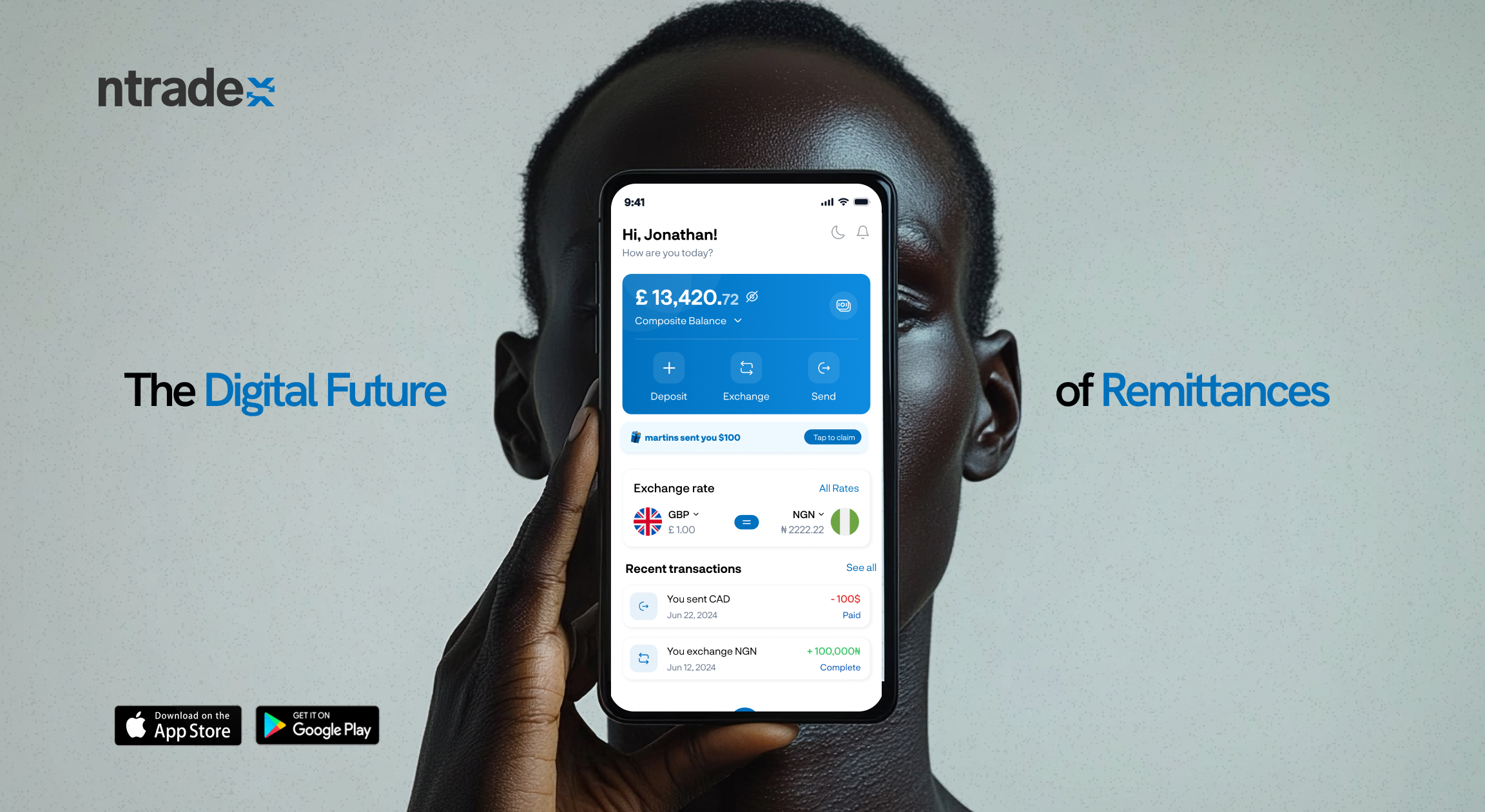
Another major trend shaping the future is the rise of multi-currency wallets. These digital wallets allow users to hold, exchange, and send different currencies with ease.
This flexibility empowers:
- Remote workers paid in foreign currencies
- Freelancers working with international clients
- Families receiving money from abroad
- Travelers who want to store multiple currencies
Ntradex’s multi-currency wallet gives users full control, helping them save money and manage their finances more effectively.
5. Mobile-First Transfers Are Taking Over
With smartphones becoming universal, remittances are shifting to mobile. Over 70% of global users now send money using apps instead of physical locations. Mobile-first platforms offer convenience, security, real-time rate alerts, and 24/7 support — all in one place.
6. Greater Financial Inclusion
Digital remittances play a huge role in expanding financial access. Billions of people who lack traditional banking can now receive money securely through digital wallets and mobile systems. This empowers underserved communities and strengthens local economies.
The Road Ahead
The future of remittances is clear: faster, smarter, safer, and fully digital. Innovations in AI, mobile technology, instant payments, and multi-currency tools are transforming the industry and creating better experiences for users worldwide.
As platforms like Ntradex continue to innovate, global money transfers will keep becoming more accessible — connecting people, supporting families, and powering businesses across borders.